How to
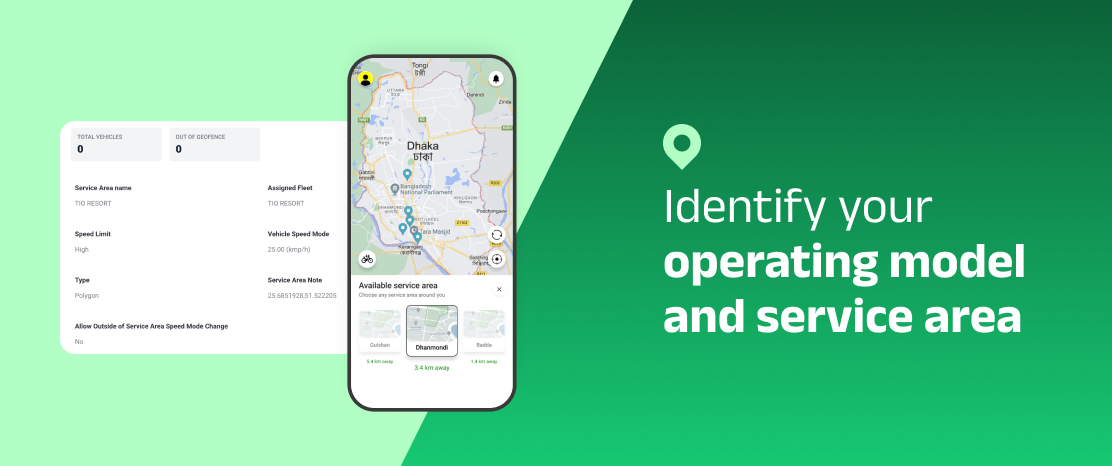
Part 2: Identify your operating model and service area

10 August 2022
“Good plans shape good decisions. That’s why good planning helps
to make elusive dreams come true.”

— Lester R. Bittel
Next, it’s important to have an understanding of what would work best for your territory.Should you focus your service on the -center or include the outskirts?
Most e-bike and e-moped sharing schemes focus on the city center for a very simple reason: higher population density typically results in higher fleet utilization, which is the key to amortizing assets and building a healthy business case. Centralizing your fleet in a smaller area also results in better availability for the consumers, improving their user experience, and encouraging recurring usage. However, there are numerous reasons for expanding the system to periphery zones:
- Outskirt areas are often poorly served by public transport, providing a good service in the outskirts would allow intermodality with public transport and solve the last-mile problem
- Electrically-assisted bicycle fleets are a great way to promote cycling beyond central business hubs and over longer distances
- Typically there is little to no competition in these areas
- You can stimulate economic strength by giving support to businesses and employers in the region
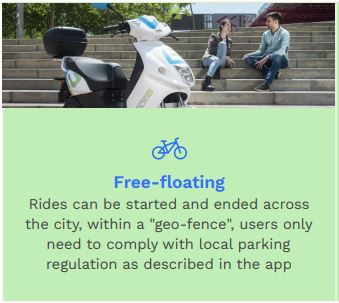
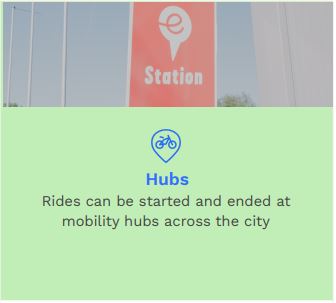
Which model is best for your micromobility fleet?
- Rider convenience: free-floating parking improves the rider experience since they have more freedom over where they can leave vehicles
- Better availability: when you have a larger fleet, this option tends to give a better user experience due to its vehicle density within the service area
- Fast to market: it’s the fastest and easiest way to launch—no infrastructure needs to be built across the city
- Optimized operations: Hubs mean higher operational efficiency as vehicles are more concentrated
- Great for commuters: this option is suitable for commuters with a frequent, defined route
- Minimize legal risks: having a designated parking zone mitigates the risk of vehicles being parked in bad or illegal places by riders
- Lower operating costs: Hubs also considerably lower costs with their simplified logistics around battery swapping
Head of Marketing